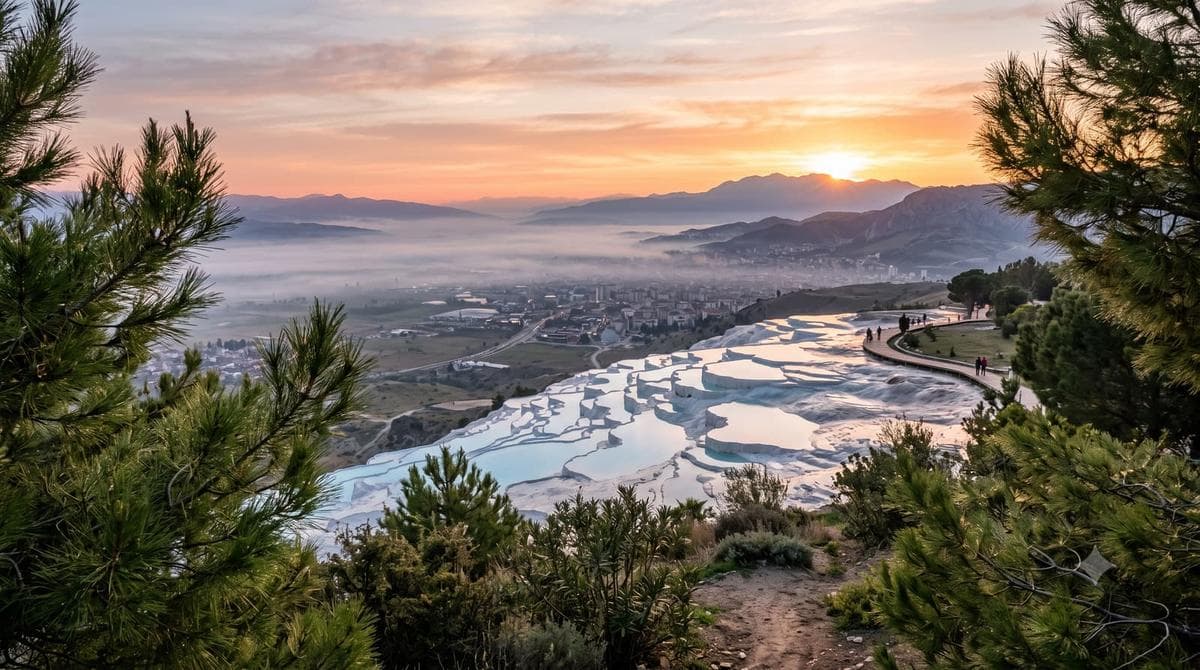
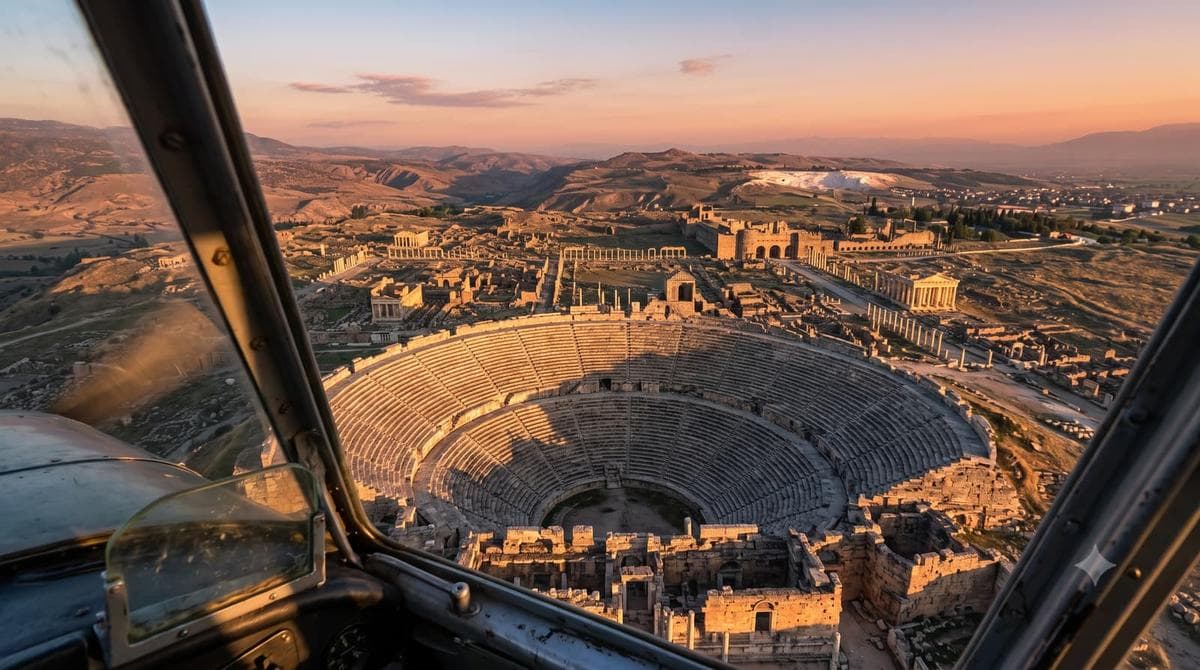
Walking through the ruins of Hierapolis and touching its ancient stones is a classic travel experience. However, to appreciate the massive scale, layout, and geographical context of this Pergamenian spa city, seeing it from the air is the ultimate adventure. On a Pamair gyrocopter flight, you will glide over the ruins, getting a completely new perspective on history.
Quick Summary: Hierapolis from the Sky Sights
When flying over Hierapolis in a gyrocopter, expect these 4 key experience highlights:
- Urban Layout: View the parallel planning of Roman avenues, the stadium, and the main squares in one single frame.
- Open-Cockpit Photography: Enjoy unobstructed camera views without cabin window glare to capture detailed stone ruins.
- Travertine Relationship: See how the ancient city was built directly along the edge of the white calcium cliffs.
- Theater Grandeur: Glide directly above the semi-circular theater rows to inspect its architecture from above.
The Ancient Layout from Above
Viewed from the sky, the Roman grid system of Hierapolis becomes clear:
- Frontinus Street: The main colonnaded avenue creates a straight axis cutting through the center of the ruins.
- Necropolis Extent: Seeing the thousands of ancient tombs spreading across the valley illustrates the historical size of the settlement.
Flight Sights: For a complete checklist of all landmarks visible during takeoff, see What Do You See on a Pamukkale Gyrocopter Flight.
Photographing the Theater from the Sky
A highlight of the flight path is gliding over the Hierapolis Roman Theater.
- Camera Stability: The gyrocopter's low vibration levels allow you to capture sharp, blur-free shots even when using high-zoom lenses.
- 3D Perspective: Seeing the stage building and seating rows from a high angle reveals details that are invisible when standing on the ground.
Frequently Asked Questions
Does flying over the site damage the ruins? No. Our flights are operated within safe altitude limits set by the Sivil Aviation General Directorate (SHGM) to protect the site.
What is the best flight time for taking photos? Sunrise and sunset (the golden hours) offer the best light, casting long shadows that highlight the textures of the ancient stone ruins.
Does the pilot describe the sights during flight? Yes. Your helmet intercom system allows the pilot to describe the history of the ruins as you fly over them.