A gyrocopter (also known as an autogyro or gyroplane) is one of the most fascinating and safest aircraft in sivil aviation. Combining helicopter-like rotary wings with glider-like aerodynamics, it has become the number one choice for scenic tourist flights worldwide. In this technical and operational guide, we will answer the most common questions: "what is a gyrocopter?", "how does it fly?", and "is it safe?".
Quick Summary: Key Gyrocopter Facts
Here are the top 4 technical details to know about gyrocopters:
- Flight Principle: Unlike helicopters, a gyrocopter's top rotor is not powered by the engine. Instead, it spins freely driven by the upward flow of wind.
- Autorotational Safety: If the engine fails, the top rotor continues to spin as air passes upward through it, allowing the aircraft to glide safely to the ground.
- Wind Stability: The gyroscopic force of the main rotor acts like a stabilizer, making gyrocopters far less sensitive to wind and turbulence than fixed-wing planes.
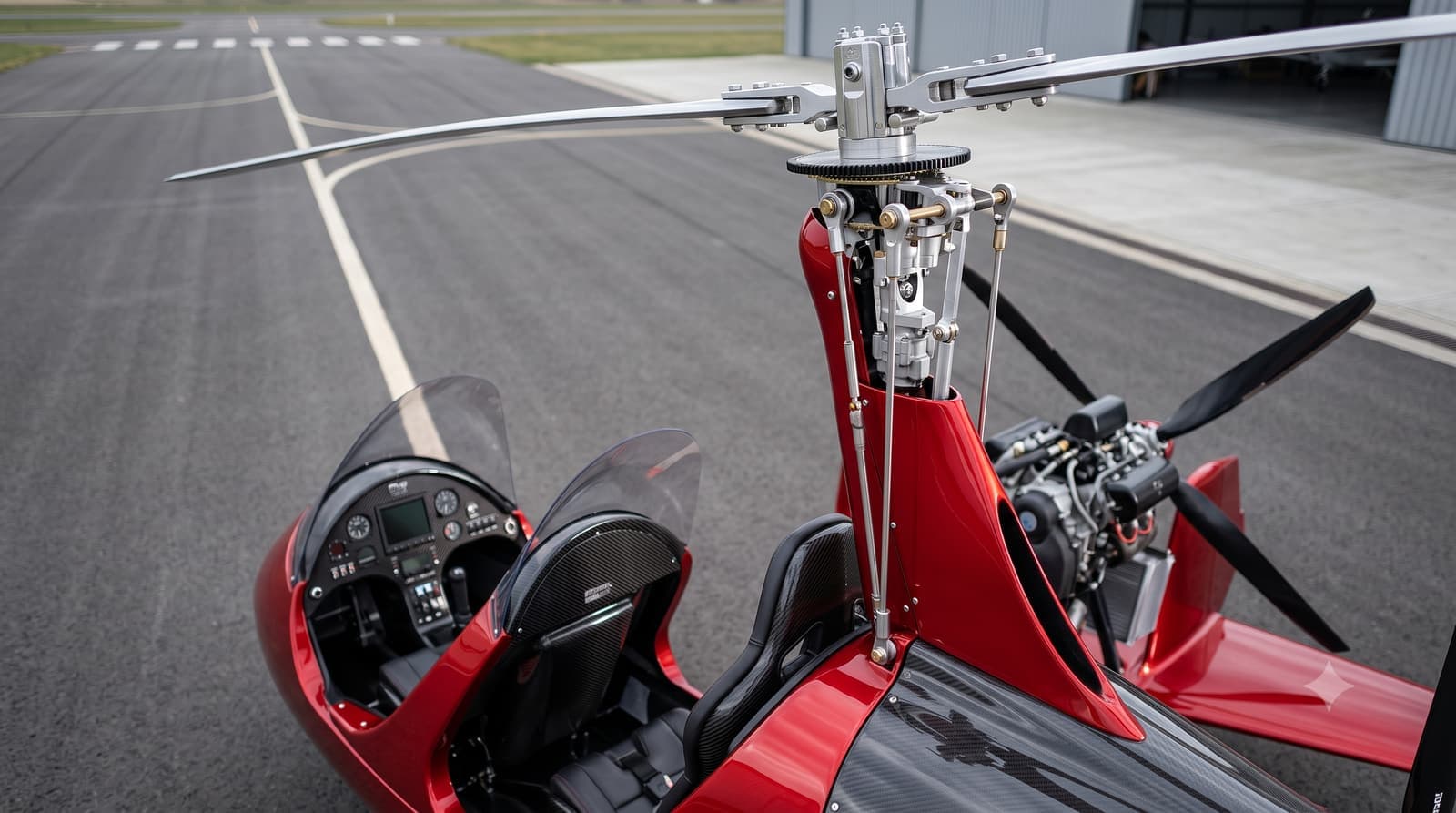
- Open Cockpit Advantage: The MTO Sport gyrocopters utilized by Pamair feature an open cockpit layout that provides a 360-degree panorama, perfect for camera work and photography.
How Does a Gyrocopter Fly? The Physics of Autogyro Flight
While planes and helicopters rely on engine power to actively turn their wings, gyrocopters utilize a simple and elegant aerodynamic principle:
- The Main Rotor (Lift): The large overhead rotor blades are completely unpowered. As the aircraft moves forward, air flows upward through the rotor disc, causing it to spin. This phenomenon is called autorotation, and it generates the lift needed to keep the aircraft airborne.
- The Pusher Propeller (Thrust): An engine-powered propeller at the rear of the cabin pushes the aircraft forward.
- Directional Control: The pilot controls the aircraft by tilting the angle of the main rotor using a control stick in the cockpit, which changes the lift vector.
Gyrocopter vs. Helicopter vs. Plane
Gyrocopters are often confused with helicopters, but they have major mechanical and operational differences:
| Feature | Gyrocopter (Autogyro) | Helicopter | Fixed-Wing Airplane |
|---|---|---|---|
| Rotor / Propeller Power | Rotor spins freely from wind (Unpowered). | Rotor is powered directly by the engine. | Wings are fixed; engine pulls/pushes forward. |
| Takeoff & Landing | Requires a short runway to takeoff; can land vertically. | Can takeoff and land vertically. | Requires a long runway. |
| Engine Failure Response | Glides down automatically via autorotation. | Requires pilot to manually initiate autorotation. | Must glide to a runway or clear field. |
| Turbulence Tolerance | Extremely high; cuts through gusty winds smoothly. | Moderate. | Highly sensitive due to large wing surface areas. |
Are Gyrocopters Safe? Aviation Standards
Gyrocopters are recognized as some of the safest aircraft in sivil aviation due to their unique safety design:
- No Stall Risk: Unlike airplanes that lose lift and stall if they fly too slowly, gyrocopters cannot stall. If airspeed drops to zero, the aircraft simply settles into a slow, vertical descent, gliding downward like a parachute.
- High Wind Resistance: Gyrocopters can fly safely in strong winds up to 40-50 knots. The gyro stability acts like a natural stabilizer.
- Regulatory Compliance: Pamair's gyrocopter fleet complies with all Sivil Aviation General Directorate (SHGM) and European Aviation Safety Agency (EASA) rules. Regular maintenance is performed by certified technicians.
The Pamair Gyrocopter Experience
Flying in an open-cockpit gyrocopter over Pamukkale is the most prestigious way to explore the white travertine terraces and ancient ruins.
- Dual Control System: Our aircraft feature a tandem seat layout with dual controls. The pilot sits in the front seat, while the passenger sits in the back, enjoying a clear view of the landscape.
- Itineraries: Learn how to include a flight in your travel plans in Things to Do in Pamukkale and Pamukkale Travel Guide.
Frequently Asked Questions
What happens if the engine fails? Since the main rotor is powered by the wind, an engine failure only stops forward thrust. The gyrocopter will enter a controlled glide, allowing the pilot to make a safe landing on almost any flat surface.
Can I talk to the pilot during flight? Yes. Your safety helmet is equipped with a noise-canceling intercom system, allowing you to talk to the pilot throughout the flight.
Can I take photos during the flight? Yes! The open-cockpit design eliminates reflections from cabin glass, making it ideal for photography. Pamair also records all flights with high-definition GoPro cameras.